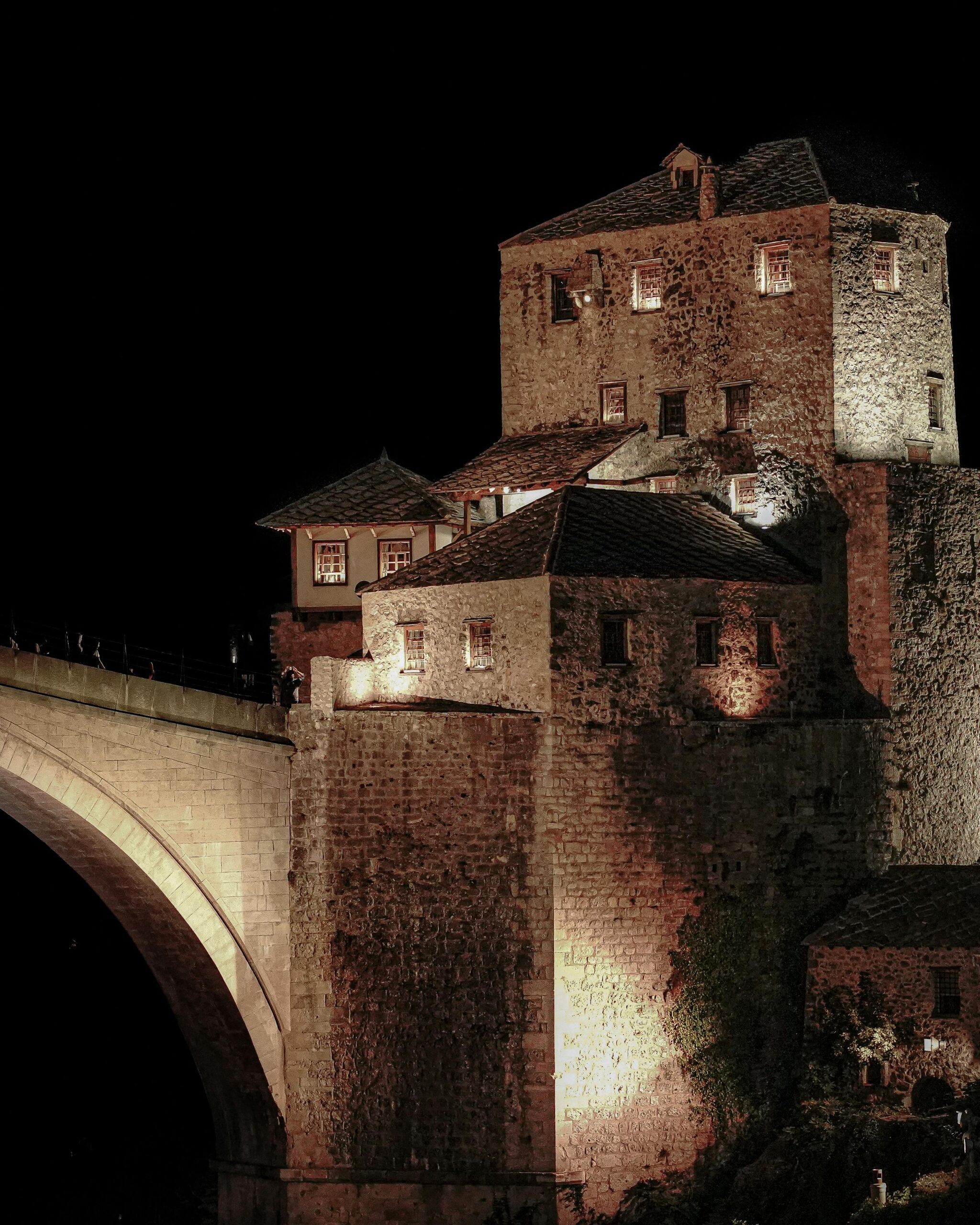
Author: Dallas Zipperer

  • Hollow Point

    Ronald stepped onto the elevator, flicking his wrist to check the time. He huffed a loud sigh as he saw that it was a quarter past six. Work was probably going to be holding him up a lot more for the coming weeks. The Castle case was beginning to get nasty. He’d known the man was wealthy, he’d known the man would have a fleet of lawyers. That was just part of the job.  He pressed the “LL” button on the elevator, shooting him down to the garage floor with a stomach lurching drop.

    The drop down the elevator shaft, while relatively short, always made him imagine what he would do in the event of a total, catastrophic failure. If every piece of engineering failed, and he fell down the hollow corridor, his body slowly lifting off the floor, until finally slamming down, splattering him.

    The elevator dinged with a spoken, “Lower Level”, in a halting automated woman’s voice. Ronald stepped through the elevator doors and went down the long corridor, his mind wandering. In the event of a total elevator failure, what would he do? Could he survive a fall like that? Surely it had been done before.

    Phone in handwhen had he pulled it out?— he typed rapidly into Safari: how to survive elhe made it to the beginning of “elevator” before Google already knew what he wanted to know. A text bubble from his wife popped over the search button, and he swiped it away. She probably wanted to know where he was at, but he could call her when he got in the car. He hit the search button.

    An “AI Overview” summary appeared at the top and he scrolled past it rapidly. Past that there were several different options. A forum board asking the question, multiple YouTube shorts with graphical representations.

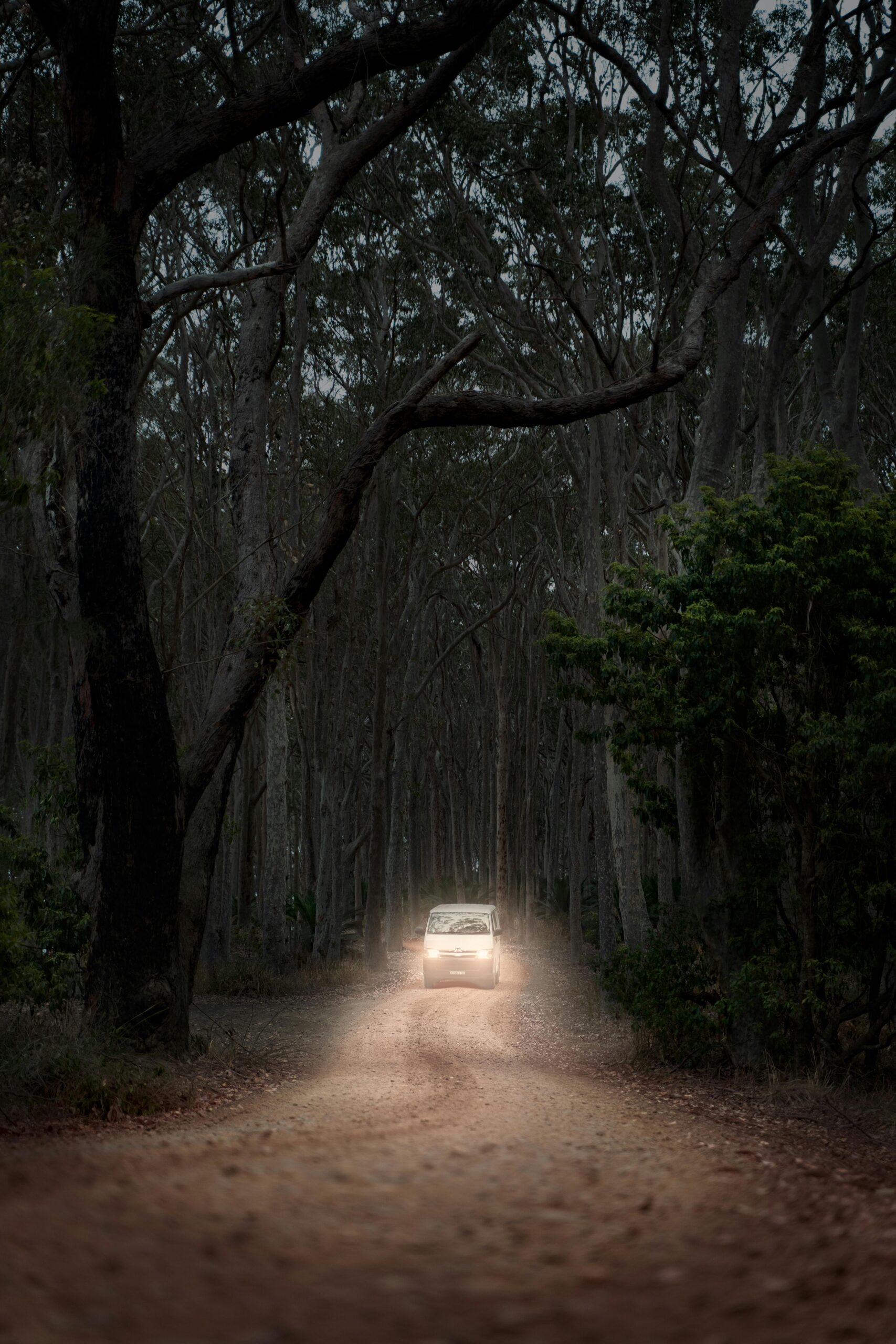
    “Hm,” Ronald muttered, making the turns by instinct into the garage. He made his way to his car, still scrolling useless facts on survival techniques he’d never use, when he finally noticed the man standing in front of him.

    Ronald did his best to slowly and non-threateningly raise his head, taking in the shape. Nice, shined dress shoes. Fitted trousers, a long winter coat that went to his ankles, up to a well-tailored suit, a fancy belt. Ronald felt his heart easing as he took in the handsome face, a strong jawline, slicked black hair with gray in his temples. His dark brown eyes were nearly black in the shadows of the darkened garage. The man smirked at him. He had the look of someone who knew a joke, and couldn’t wait to let you in on it, and Ronald found he wanted in on it.

    “You’ll run into someone one day, walking like that,” and then the suave man mimed Ronald’s stature, hands held before him, face stuffed downward.

    Ronald deflated and flushed. With a light chuckle he said, “Yeah, you’re right. I get onto my kids for the same thing.”

    “Ah,” the man said, nodding as if Ronald had given him all he needed.

    This was what he got for getting held up at work, stopped by strangers. Ronald smiled as amiably as he could, but the man made no move to get out of his way. The phone in his hand buzzed again, and he glanced at it to see his wife calling. He tapped the side key to silence the buzzing.

    They stood before each other, each second ticking past making Ronald feel a pit grow in his stomach. The man continued to smirk at him, the tips of his eyes crinkled. So much mirth hidden in that half-turned smile.

    “I’ll bet you were looking up some random fact,” the man said with a snap of his fingers. “You came from an elevator I’ll bet. Were you checking the statistics on elevator deaths? You know it’s usually a failure in the doorway.” He then made a knife motion towards his own throat, pantomiming death. Ronald let out a soft chuckle but could feel his own smile not make it past his lips.

    “You know here’s another random fact, but this one might be more pressing. A hollow point bullet, do you know what that is?”

    Ronald shook his head. A hollow point bullet? His teenage son probably knew, but Ronald had never even held a gun. Well, that wasn’t true, he remembered vaguely a time in college. But he’d never shot the thing. The pit in his stomach grew heavier, and his pulse quickened.

    “Well, a hollow point, you see, is a bullet with its tip hollowed out. It’s to make the bullet’s expansion wider,” and he opened his hands from a fist, miming an explosion, his smirk turning into a genuine smile. “Works on soft targets, doesn’t do too well on hard targets. You see, full metal jacket is for going through stuff, hollow points are for fucking stuff up.”

    For a strange second the word ‘fucking’ took a long time to register. The suave man using that word so casually was more outlandish than the general conversation. Ronald held up a hand. “Why does this matter? You said this one was pressing.”

    The man snapped his fingers again, laughing a genuine laugh. “You’re right! I did say it was pressing, you lawyer types, you know how to catch words and make ’em stick. It’s pressing because I’m about to shoot you with one.”

    The smirk had melded into a wide, shark-toothed, rictus grin, too many teeth and too white. Confusion hadn’t had enough time to evolve before the man was casually tossing back his long jacket, and in one smooth motion was drawing out a huge, black handgun.

    Ronald tried to shield himself with his hands, but it was too fast. There was a flash, but he’d expected there to be a bigger bang. The wind knocked out of him. The man had punched him in the chest for some reason. Ronald stumbled backward, catching himself onto the hood of the car behind him. He had enough time to watch the man strolling away before he felt the first trickling of cold liquid spilling onto his chest, staining his undershirt.

    Ronald pawed at his chest, unsure of what to do. Breathing was difficult and his vision was fading fast.

    Ronald had one thought that clamored to the top of his consciousness. One he couldn’t wrap his head around as he felt the first wave of pain. This thought stood out at the forefront, above the sticky blood covering his hands. He’d ignored his wife’s call, and now she wouldn’t know what happened to him.

  • Signal

    Signal

    Andrew sat strapped to his seat. His arms and legs were pinned to the life support chair, jacked into it “for his safety.” He was allowed minor head movements, but his helmet was also tied to the machine. Fresh air vented in. The tubes and wires lining his skin fed him the nutrients and hydration he needed at maximum efficiency.

    Wayfarers of old would have killed for the longevity that his tiny support vessel gave him. Wayfarers of old also weren’t so miniscule in the vast expanse of space. They at least had the chance of being found.

    Andrew craned his neck, so he could look out the tiny glass window into the black void. Tiny specks of light dotted his view, but that was better than what sat across from him.

    Claire had died slowly, the life support unable to handle the bleeding in her side. It had segmented off parts of her body, breaking down pieces as they died, preserving what it could until all that was left was a brain and a beating heart, until even that stopped.

    She’d cried, begged him to help her. But he was as trapped as she was. Unable to free himself from the constricting bonds of his savior.

    Andrew shuddered to think about the material that even now was being fed his body. Had the machine begun utilizing her biomass to preserve him? He didn’t want to think about that but couldn’t prevent his mind from wandering.

    The machine was prolonging his hibernation longer and longer. Waking periods were shorter and shorter as the machine maximized his resources. The SOS signal had been set to a steadily pulse into the cosmos.

    Andrew awoke with a snapping of his eyes. He was face to face with the empty suit, and he had to struggle to move his head to the right, out the window, to the black speckled window. His neck muscles were weakening. He scanned his visor HUD for the date and was horrified to see four standard Earth days had passed.

    His mouth felt dry as he smacked his tongue against the roof of his mouth. He wiggled his fingers in the carapace of his suit and counted each sensation. When he hit ten fingers present and accounted for, he sighed with relief. He moved the spotlight of his consciousness down his body, passing his thighs to his feet and toes. He strained to wiggle through the haze of tingling sensation and swore he could feel the digits moving. Then with breath quickening and heart pounding in his chest, he realized he couldn’t feel the sliding scrape of the suit against his skin. He forced as hard as he could, straining against the suit until he realized his calves ended in stumps, pressing against the partitioned off suit.

    “Oh, oh God,” Andrew wheezed. His voice came out in a hoarse whisper. “No, no. Please, don’t take all of it. Don’t! Just put me to sleep and don’t wake me again!”

    But he knew even as the words escaped his lips that he would wake again. The machine had to wake him. It didn’t have the resources to put him into a cryo sleep.

    No no no

    Andrew struggled against his bonds, pulling with his arms, twisting his head back and forth. The escape pod floated in the same trajectory, heading for the nearest inhabited star system. It was too far. Much too far.

    He didn’t know how long he was awake before sleep took him again. He stared out the window at the shiny stars until they blurred his vision.

    When he awoke again, six SEDs had passed. The max the ship was allowed to keep him asleep.

    He groaned, the movement of his neck too hard. He struggled mightily, forcing his head over to the window, peering out the glass. The stars appeared the same, the shapes of their constellations completely unchanged. Andrew knew he shouldn’t, but he cast the spotlight of his attention around his body and felt the ghost of movement. His fingers moved willfully, his toes followed. For a blissful moment he was standing and freeing his crewmate, what had her name been? It didn’t matter, he was unbuckling her and helping her out of the chair. They were embracing and crying with relief. The pod had landed and rescue teams and camera crews and the President himself was there.

    And then he felt the emptiness. The ship had done its job.

    Andrew peered out the glass at the empty stars. For a moment he wished a Lovecraftian horror would appear at the glass, a tentacle monster with too knowing eyes breaking in and ending his suffering. But he knew even that was fantasy, that out in this empty expanse of space all he had was the empty suit across from him, and the good Doctor partitioning off his parts to reclaim the biomass, to keep him going for as long as it could.

    Andrew closed his eyes and willed himself to sleep for the final time. He knew he wouldn’t wake again. He wanted it to come. He wanted to feel his hands again. And for a last moment before the darkness collapsed around him, he did.

  • Ray Bradbury Trio: Week 5

    Ray Bradbury Trio: Week 5

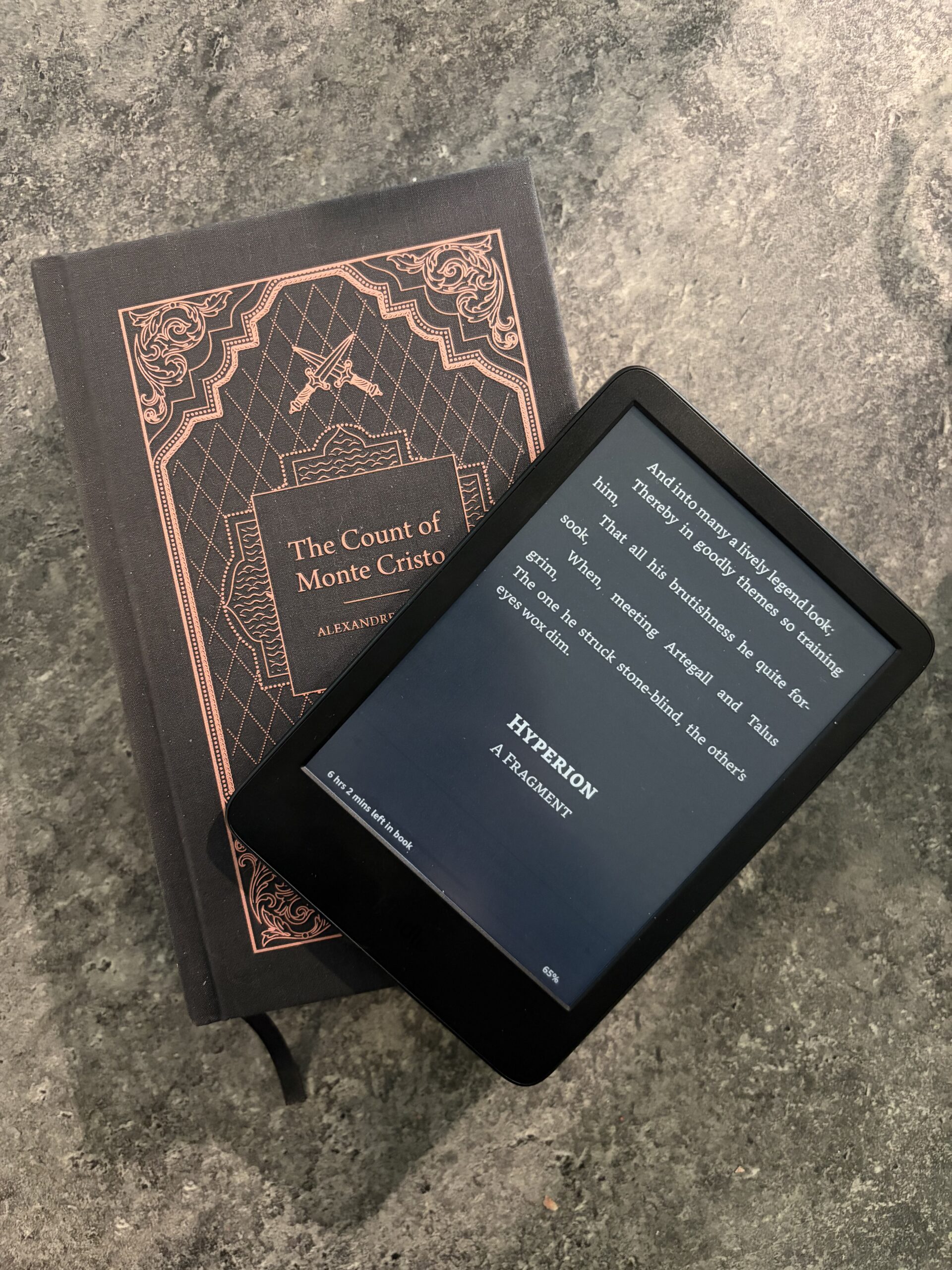
    Author’s note: For now I am reading poems from John Keats. The short stories and collection of poems I acquired from the public domain.

    Essays I collect from a wide range of sources: aeon.com, nautil.us, cleavermagazine.com, and many solo writers like Aldous Huxley and David Foster Wallace. I read anything that piques my interest.

    Also a word about the essays, some of these behemoths are super long. While I will do my best to finish them in their entirety in a single day, I can and will read them over the course of several days if I have to.

    Sunday

    • Story: In an Hotel – Anton Chekhov
    • Poem: Endymion – I
    • Essay: Detachment Focus Rubricae Phalanx

    Monday

    • Story: Hypnos – H.P. Lovecraft
    • Poem: Endymion – I
    • Essay: Homeric Literature and Gold Covered Mummies Discovered in Egypt

    Tuesday

    • Story: Boots – Anton Chekhov
    • Poem: Endymion – I
    • Essay: What Kant can teach us about work on the problem with jobs

    Wednesday

    • Story: The Hound – I – H.P. Lovecraft
    • Poem: On Oxford
    • Essay: Millions of people are pretending to be AI chatbots

    Thursday

    • Story: Nerves – Anton Chekhov
    • Poem: On Blank by John Keats
    • Essay: Sure, it can backflip – but can a robot hold down a desk job

    Friday

    • Story: The Hound – II – H.P. Lovecraft
    • Poem: Lines by John Keats
    • Essay: Want a better night’s sleep Go camping

    Saturday

    • Story: The Knock at the Manor Gate – Franz Kafka
    • Poem: Stanzas by John Keats
    • Essay: Yale Experts Explain PFAS ‘Forever Chemicals’
  • Rust

    Rust

    Jasper hefted his bright orange torch and inspected the old runes. The archaic language sat on triangular tiles. He scrutinized the words, deciphering the translation.

    He scrunched his face, the words coming slowly to him. The first triangle read:

     forward we march towards

     The second triangle translation wasn’t obvious, so he moved to the third one. He reached out and tapped it, and it glided freely.

    Unto Life, Unto Death it read.

    And that middle triangle… Meat? Metal? Jasper attempted to construct them into a sentence. forward we march towards was all in lower case, meaning it was probably the middle of the sentence.

    “Unto Life, Unto Death, forward we march towards… meat and metal. No that can’t be right.”

    His voice echoed around the stone hall, causing him to flinch. He glanced around at the long shadows, then tentatively moved the triangles into the sentence, forming one triangle.

    When the three runes were slotted into place, they snapped together and began to spin. When the triangle finished spinning it was upside down, the meat and metal pointing up. As it settled, the door ground open, dust pluming away from the edges of the rough stone. Jasper coughed and waved it away as he pushed through the threshold.

    He smirked to himself as he swept his torch into the new chamber. When he stepped into the large room, the tiles beneath his feet thrummed with energy, and a blue glow emitted from them. The torch became irrelevant as the entire area became awash in light.

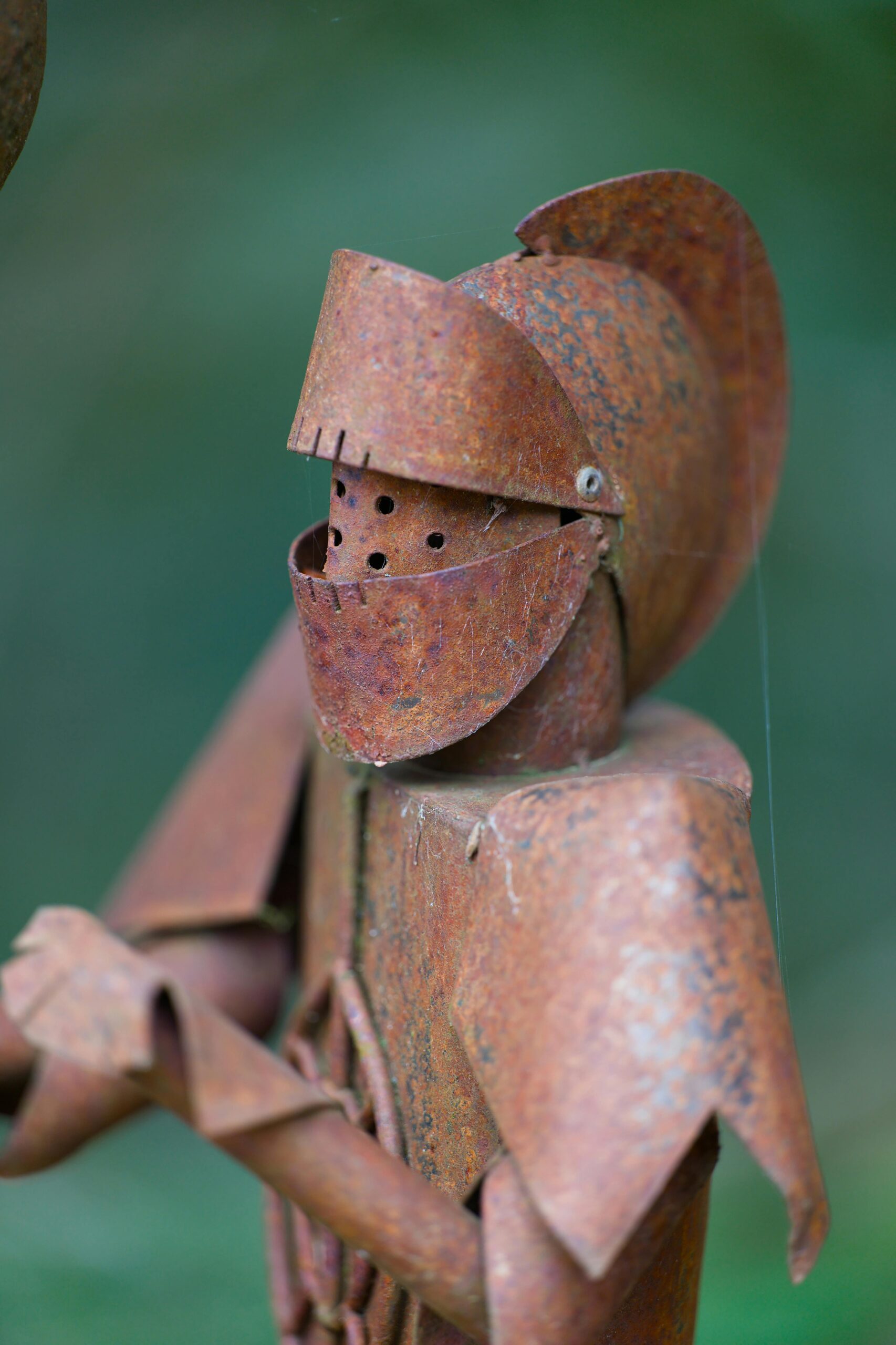
    Dusty iron bound wooden barrels sat in the corner. A huge table sat next to the barrels, piles of swords cluttered on top. Off to the right was a barred gate and beyond the gate looked like an empty bath house. Jasper swept his eyes back to the center of the room where a long hallway stretched on and on, lit by bright blue tiles. At the entrance to the hallway was a pile of rusty plate mail. Cumbersome stuff, tiring. Jasper hated training in it, himself, and was glad to never have to again.

    Jasper eyed the long hallway but headed towards the gate. He assessed the bars, tugging on them. He squinted his eyes into the darkened room beyond, not lit up from the ground. Yes, definitely a bath house. Hot humid air washed over him, and he could hear a faint trickle of water somewhere within. Jasper smacked his lips, his tongue sticking to the roof of his mouth.

    He returned to the other side of the room, inspecting the barrels. The first one he managed to pry open was empty, whatever its contents long since dissolved away. An odor wafted from the wood, conspicuously sweet with rot.

    At the table, the rusted metal was definitely all swords. Jasper pulled on his leather gloves, careful not to cut himself on the orange crusted blades. He hefted one, much too big, and laid it to the floor. If properly refurbished, these could go for a pretty penny.

    There were duds, several broken cross guards, some missing pommels. A few had segments of the blade that still gleamed a steel mirror shine. Most were completely rusted through, all were damaged in some way. Chips, cracks. Jasper tested one against the side of the table and the blade sheared away into crumbling pieces where it impacted.

    Swords. Great against unarmored people. Most unarmored people weren’t looking for a fight, hence they weren’t wearing armor. Which begs the question, why carry a sword?

    Jasper hefted the cleanest looking one and gave it a few generous swings. The balance was excellent, the weight superb. He tossed it back onto the pile disdainfully, letting it clatter against the rest. He pulled the straps of his leather pack against his shoulders, then headed for the hallway.

    As he approached, the rusty armor on the ground creaked with motion. It rolled to one knee, a hand against the ground, then hefted a sword that had been underneath it and used it to lever itself to its feet. The tip of the blade crunched against the stone, grinding with a cringe-inducing scrape. Jasper took a step backward, raising a hand against the monstrous form standing before him. He couldn’t see into the shadowed visor, but when the man spoke his voice was no better than the blade scraping the floor.

    “No further.”

    Jasper looked around, then finally pointed at himself. “Who, me?”

    The knight of rust tilted his head to the side, inspecting Jasper. Then he took a fighting stance and hefted the sword in an impossibly still position.

    Jasper paced back and forth, eyeing the knight, and the passage beyond him. Then he tsk’d loudly, and returned to the table of blades, dropping his leather bag to the ground. The humidity wafting from the bath house was getting more intense, but he paid it no mind. He found the battered blade he favored before, then took a few hesitant test lunges.

    “You wouldn’t happen to have a mace or a halberd I could use instead, do you?”

    The knight stood still in his statuesque pose, not moving.

    Jasper sighed, “Thought not.” Then he approached the knight, blade tip out. His weapon was shorter, but his opponent would be slower and his blade heavier-

    The knight sprang forward, the sword licking out and nearly clipping Jasper in the throat. He barely got his parry up in time, the impact spraying orange dust. He cursed as he was put on the back foot, parrying rapidly. The knight took methodical probing strikes. His stances, while outdated, were immaculate, and he was able to transition between them in rapid succession.

    Jasper circled backward, fleeing the duel. “Do we have to do this?”

    The knight cocked his head. “Yes.” Like gravel tossed against bark.

    “Why?”

    The knight charged forward, closing the distance faster than should have been possible in full plate.

    Jasper fought against the instinct to simply turn and run, knowing if he did so he’d fully expose his back. Instead, he took bounding leaps towards the far wall.

    Back squared against the bars of the bath house, Jasper defended rapidly. Then he left himself intentionally open, forcing an obvious strike from the rusty knight. The blade danced forward, and Jasper flung himself to the side. The knight with his perfect technique was predictable. His blade rang loudly as it clanged against the bars. He tried to pull the blade back out, not even hesitating. Jasper struck hard, striking the gauntlet, trying to force the blade out of the knights hands.

    Plate crunched and splintered apart, fingers came away in orange splinters and the blade clattered to the other side.

    “Ha!” Jasper shouted, pointing in the knight’s face. “Do you yield?”

    The knight gut punched him, knocking the wind from his lungs. He doubled over, gasping for breath. He had the presence of mind to scramble back, coughing and wheezing.

    “What… why…”

    The knight began stalking to the table, his stride slow and purposeful. Jasper gathered his strength and charged, inverting his blade so that the pommel was up, and crashed down with the force of a sledgehammer into the back of the knight’s head. It clanged dully. The last time Jasper had done something like that, he’d killed a man. The helmet was completely dented in, a massive ball sized inverted dome. Black liquid leaked out from the neckplate.

    The knight turned toward him, his shoulders raised like a wolf’s hackles. His aura promised violence.

    Jasper, horrified, thrust with the blade tip, bringing it into the visor as hard as he could. The blade bit into soft flesh, and the knight let out an “oof!”, then fell backwards, lifeless.

    The blade stuck upright out of the visor, oscillating back and forth. Jasper shuddered, and unable to help himself, yanked the blade free and lifted the visor. Putrid flesh greeted him.

    Jasper leaned over and retched. He wiped his mouth, coughing, and said “Good God.”

    On shaky legs Jasper made his way down the hallway, the dim lights from under the tiles guiding him. The final tile illuminated the doorway in a bright light, and he grasped the orange flaky handle. He pushed the door inward, and it swung in halting movements, each stop requiring him to force it more and more until he was fully into the room.

    Glittering mounds of gold greeted him. Chestfuls of it. Precious gems and gaudy goblets and ornately crafted weapons. Jasper fell to his knees and scooped the nearest pile. He hefted the coins to his face, and the smell of the deteriorated metal assaulted his nose. Jasper frowned as the coins in his hands began to flake, the gold rusting before his eyes, crumbling away to orange dust.

    “No,” he said. He scooped another handful, and when it crumbled, he checked the next, and the next. He realized his translation mistake as more precious artifacts crumbled away. Unto Life, Unto Death, forward we march towards… Rot and Rust.

  • Ray Bradbury Trio: Week 4

    Ray Bradbury Trio: Week 4

    Author’s note: For now I am reading poems from John Keats. The short stories and collection of poems I acquired from the public domain.

    Essays I collect from a wide range of sources: aeon.com, nautil.us, cleavermagazine.com, and many solo writers like Aldous Huxley and David Foster Wallace. I read anything that piques my interest.

    Also a word about the essays, some of these behemoths are super long. While I will do my best to finish them in their entirety in a single day, I can and will read them over the course of several days if I have to.

    Sunday

    • Story: The Swedish Match II – Anton Chekhov
    • Poem: Written on the Blank Space at the End of Chaucer’s Tale of The Floure and the Lefe
    • Essay: ‘The chances of you living 50 years are very small’ Theoretical physicist explains why humanity likely won’t survive to see all the forces unified

    Monday

    • Story: The Adventure of the Copper Beeches – Arthur Conan Doyle
    • Poem: To Haydon
    • Essay: A Poet of Science Who Shook Faith in God

    Tuesday

    • Story: Celephais – H.P. Lovecraft
    • Poem: On Seeing the Elgin Marbles
    • Essay: Gen Z is collecting silverware now—here’s why it matters

    Wednesday

    • Story: The Marshal’s Widow – Anton Chekhov
    • Poem: On Leigh Hunt’s Poem, the Story of Rimini
    • Essay: How the Anglophone world is rediscovering Hegel’s philosophy

    Thursday

    • Story: The Lurking Fear – 1. The Shadow on the Chimney – H.P. Lovecraft
    • Poem: To Leigh Hunt, Esq.
    • Essay: Politics and the English Language

    Friday

    • Story: Small Fry – Anton Chekhov
    • Poem: On the Sea
    • Essay: The Book That Invented the World

    Saturday

    • Story: An Old Leaf – Franz Kafka
    • Poem: Endymion – Preface and I
    • Essay: Naturalizing relevance realization – why agency and cognition are fundamentally not computational
  • Threshold

    Threshold

    Henry stood next to Pierce, shoulder to shoulder. They watched the floating arena through the blue haze of their blast shield, the warbling buzz of the force field brimming with energy.

    The two teams sped from object to object, green and blue beams arcing away from their lasguns. Angry light scars held for a few moments before dissipating, but when Henry blinked, he thought he saw the ghost of the light still haunting the line it had cut.

    “We got crushed out there,” Henry said.

    Pierce grunted. His blonde curls bobbed on his head, and the part in the middle was still there. Had he combed it somehow? The bastard wasn’t even sweating. Henry halfway expected him to shake his thumb and pinky and say, ‘Surf’s up, bro!’

    Instead, Pierce turned an intense gaze on him. “We got crushed because you’re predictable.”

    Henry looked straight ahead and watched as the woman on the Green team made a perfect zero-g transition off an obstacle. For a horrifying moment, Henry thought he was watching Garcia flying around the arena, twisting and bounding and redirecting herself, until she disappeared behind some floating detritus. Flashes of light chased after her.

    “I’m not predictable, you just wouldn’t come with me. Faster to the ball, faster we score it.”

    Out of the corner of his eye, he could see Pierce shaking his head.

    “How am I wrong? Gotta score the ball. That’s the point of the game.”

    As if to accentuate his point, the gleaming metal ball came into view, headed straight for the Blue team’s gate. It was thrown from a great distance at high speed. That was a risky move, and a Blue team player collided with it before it hit the gate.

    “Shouldn’t have thrown it there,” Pierce said. “Should’ve maintained ball control. After hitting a tag then move in for the kill.”

    Henry grunted his assent. He was right. That wasn’t how he would’ve played it with his previous partner, but he was right.

    Pierce watched with a hand cupping his chin, brow furrowed. “Yes, Blue has them now. Green’s initial strategy wasn’t executed properly, even though they countered Blue. Now they are… yup.”

    The dinging of the ball clearing the gate erupted through the arena. That put Blue two to zero against Green. One more round and they win the match.

    The station made a lurching motion as the outer chassis of the dome spun around the arena, repositioning Green and Blue’s gates, still opposite of each other but now in different relative places to the floating islands.

    Henry always hated the stomach lurching feeling. A new ball slotted at the new top side of the dome. Through the glass of the dome was the vast expanse of open space, twinkling stars in the infinite distance.

    Bots twirled about, camera lights bright as they captured every movement, every flash of the lasgun.

    Pierce sighed next to him. “I’m sorry. It’s not that you’re ‘predictable’. It’s just you’re you. Everyone knows you’re good at Rush. Hell, man, you basically built the strategy.”

    Henry gave a slight nod. His mind trailed to when the game was fresh, when everyone was testing and trying new things. And there he was, first to the ball, first to score. Zero-g movements were difficult, but for Henry…

    “The game’s different now though. You can’t just Rush every time. They’ve adapted. And I’m sorry, I’m no Garcia. I can’t keep up with you like she could.”

    Hearing the name hurt. Thinking of the time flying with her, and winning, hurt. “Don’t,” Henry sucked in a deep breath. “Don’t say her name.”

    Pierce physically recoiled but recovered quickly. “Of course, sorry man.”

    Green and Blue were at it again. The gates blasted open, sucking the two players into the arena. Now that their position rotated higher, they had an excellent view into the arena. The Green team Anchored, an incredibly defensive position. Henry could hardly control himself from scoffing. Where was the beauty in it? Where was the movement? The skill. Then the Blue team came bursting into view. They already had the ball and were expertly tossing it back and forth as they zig zagged across the arena.

    There it was. The fast movements, the precision. Shots were fired at the two moving figures, but they were moving too fast, bits of rubble and debris providing the cover they needed as they maneuvered closer and closer.

    Shots hit hard against the Green team, scoring a full disable on one player and a half disable on the other. It was enough. The ball was in, and it had only been a minute from the start of the match.

    Henry raised a fist and let out a whoop. “Now that’s what I’m talking about! Did you see their coordination?”

    Pierce nodded sagely. “Anchoring is terrible against Rush. Blue read them like a book.”

    Henry turned a cross eye on Pierce. “Read them? Outplayed them.” But even as Henry was saying it, he knew Pierce was right. Blue hadn’t used rush at all the past two rounds. Now that it was over, it seemed obvious that they would, but Green had been pounded, forced into a reactive mindset, off balance. They needed a moment to resettle and regroup, and Blue knew that.

    “Okay, alright, Pierce. Read them. They flew incredible though.”

    Pierce appraised him then. “We’re up next, Henry. I have a plan.”

    Henry bristled. “Alright.”

    “We start with Anchor.”

    “No, absolutely not. Can’t stand it.”

    “Right, that’s exactly it. They expect you to Rush. They’ll be running Suppress. Anchor beats Suppress nearly every time.”

    Henry closed his eyes against the lurching of the great station. It whirled them around, repositioning them against their next team, White.

    “Alright,” Henry said when it was done.

    “It really wou- wait, alright?”

    “Let’s do it.”

    “Well… perfect.”

    Henry thought for a moment then said, “And for round two, they’ll expect us to run Anchor again, so they’ll run Rush? So, we run Suppress then?”

    Pierce crossed his arms and let himself float slowly off the platform as the zero-g turned on in their room. “Not exactly… They might expect that and run their own Anchor to defeat our Suppress. So, we’ll actually run Rush.”

    Henry felt a jolt of excitement as the make-ready timer started over their blast door. “What happens if they actually run Rush anyway?”

    Pierce patted Henry on the back, the motion setting him spinning. “You’re Henry, you invented Rush. If anyone can win the mirror match, it’s you.”

    Henry felt his smile reach his eyes. The countdown started. 10, 9, 8…

  • Ray Bradbury Trio: Week 3

    Ray Bradbury Trio: Week 3

    Author’s note: For now I am reading poems from John Keats. The short stories and collection of poems I acquired from the public domain.

    Essays I collect from a wide range of sources: aeon.com, nautil.us, cleavermagazine.com, and many solo writers like Aldous Huxley and David Foster Wallace. I read anything that piques my interest.

    Also a word about the essays, some of these behemoths are super long. While I will do my best to finish them in their entirety in a single day, I can and will read them over the course of several days if I have to.

    Sunday

    Monday

    • Story: In the Graveyard – Anton Chekhov
    • Poem: To Kosciusko
    • Essay: Common Sense by Thomas Paine – Public Domain

    Tuesday

    • Story: The Music of Erich Zann – H.P. Lovecraft
    • Poem: On the Grasshopper and Cricket
    • Essay: Cyborgs and Space

    Wednesday

    Thursday

    Friday

    Saturday

    • Story: A Country Doctor – Franz Kafka
    • Poem: Sonnet After Dark Vapours
    • Essay: Up, Simba
  • Giving Grace

    Giving Grace

    I stood at the doorway. I could hear the sounds of laughter and children screeching through the heavy door. I took a deep breath and grasped the doorknob, opening it and stepping through the threshold. The noise of the inside washed over me, and my entrance into the small hallway went unnoticed.

    “Yes, yes dear, I love you too,” said a sultry voice off to my right. I turned to see Aunt Tammy eyeing me from the bar room. It was empty except for her, and she was already slipping her phone back into her purse.

    “Gregory, dear!” she exclaimed. She had an assortment of glasses in front of her, bottles of every color and size. “It’s never too early for shots, let me pour you one.”

    “No, no! I’m okay, thanks,” I said.

    Aunt Tammy squinted her eyes at me. “Suit yourself.” She threw the shot back in one quick gulp, then plopped the glass down with a clink. She stalked toward me, and I could feel my body tensing.

    “So,” she said. She rocked on her heels. “You’re the oldest now.”

    My stomach sank. Not her too. I tried to hide the pain from my face.

    “Are you nervous? About… Well, he always did the blessing.” Aunt Tammy put her hands up, cutting me off. “Not that you have to do the blessing.”

    “I’m thinking about it. And no, I’m not nervous,” I said, running a hand through my hair. She smiled a sad smile, clearly not believing me. We hugged and then we turned to the scrum of people.

    “Where’s Kate?” she said.

    I winced. “We… broke up.”

    Aunt Tammy feigned a gasp, then laughed.

    “It’s nothing, Aunt Tammy. Just not a good time for a girlfriend.”

    “Not a good time! You’re thirty-four! Get married already, Greg.” She waved out of the shadowed cave we stood in toward the greater living room. It was packed with bodies, children running in between small packs of adults, the noise deafening even over here. She narrowed her eyes. “Or maybe not.”

    We had a laugh at that, then I said, “Into the fray,” and strode into the living room.

    Cheers erupted from the children. Nieces and nephews came scrambling up, with chants of “Uncle Greggy!”, even little cousins who didn’t know any better took up the chant, and I was swarmed by little pressing bodies.

    I went on the attack. Roaring like a monster, I snatched up the first squirming wriggling form that reached me, swinging them up and around like a battering ram, pushing through the crowd. I didn’t have to fake laughter as the kids attacked back, redoubling their efforts. I hugged and kissed foreheads and patted heads, pushing my way to the small circle of adults.

    My twin siblings laughed and embraced me. Sterling gave me a vigorous hug, slapping my back a little too hard. Avery was next, giving me a soft hug.

    Our little circle broke off into the small kitchen. “So,” Sterling said. “How are you feeling?”

    “What do you mean?” I asked, my smile faltering.

    Sterling put his hands up in quick surrender. “Nothing, bro. You want a Shiner?”

    I shook my head. “No, no I’m good, man. Sis, how we doing?”

    She looked at me from under her shaggy bangs, her eyes big and round. “We’re good, Greg. Are you going to do it?”

    I looked between the two of them. Then Sterling said, “The blessing, brotherman. You gonna do it?”

    I shrugged. “I’m thinking about it.”

    Avery gave a bitter laugh. “I don’t know how anyone is supposed to be thankful right now.”

    Sterling caught my gaze and interrupted, pointing an accusatory finger at me. “Say. Where’s Kate?”

    I stiffened, my palms up. “I… we…”

    Avery gasped audibly. “No! You didn’t. On Thanksgiving?”

    “Nothing like that! I broke up with her a few days ago.”

    Sterling laughed out loud, shaking his head. “You sure you don’t want a Shiner, man?”

    “I’m sure,” I said, a little more stern than I wanted. “Where’s Papa?”

    Avery pointed to the back door, “Turkey duty.” I nodded, then hugged them again. They returned to their spouses, and I pushed through the mosh pit of cousins and uncles and aunts, snagging hugs on the way through, laughing at crude jokes, planting a smile on my face. I did my best to ignore their looks, the questioning gazes.

    I went through the back door, pushed aside by a flood of kids. I shook my head at the passing chaos and made my way down the concrete path to the outdoor kitchen. Papa stood next to the gigantic, stainless-steel fryer, a fat cigar in his mouth and a whiskey glass nearby. He wore a baggy Hawaiian shirt and flip flops. His hair was shaggy and long, since Grandma passed he rarely got it cut anymore.

    “Hey, Pop,” I said in greeting. He turned to me and grunted, smiling around his cigar.

    “Hey, Kiddo.” We hugged. He waved me toward the fryer. “Step into my office, son.”

    I followed, taking my place next to him. We checked gauges, tracked time and adjusted the heat.

    I could feel the question, the one they all wanted to ask, but he stayed quiet, steadily chewing on his cigar.

    I broke the silence. “I’m thinking about giving Grace for the family. Since… you know.”

    Papa nodded. He picked up his whiskey glass with the same hand that held the cigar and took a sip. “Yeah,” was all he said.

    “Problem is, I’m not sure how.”

    Papa grunted a laugh, a raspy sound. “Well, son. Thankfulness, grace, blessing. It’s a heart condition,” and he patted his chest. Then he saw my face. “A thing you feel in your mind, smart ass. It’s something you have to live and feel. Then you pray to our Heavenly Father and thank him.”

    I nodded. “But how,” my voice cracked, and I felt a lump in my throat. “How are we supposed to be thankful?”

    Papa peered at me. “You angry?”

    I coughed. Thought about it. “Yes.”

    “At yourself?”

    “Yes.”

    “You know, when your father passed and your mother did… Well, what she did, it was easy for me to be angry too. I bathed in it. Was my daily bread. But now, with Bradley, I feel only heartache. I say give your anger to God, son. He can be angry enough for the both of you.”

    I chewed on that, then Papa’s watch buzzed at him.

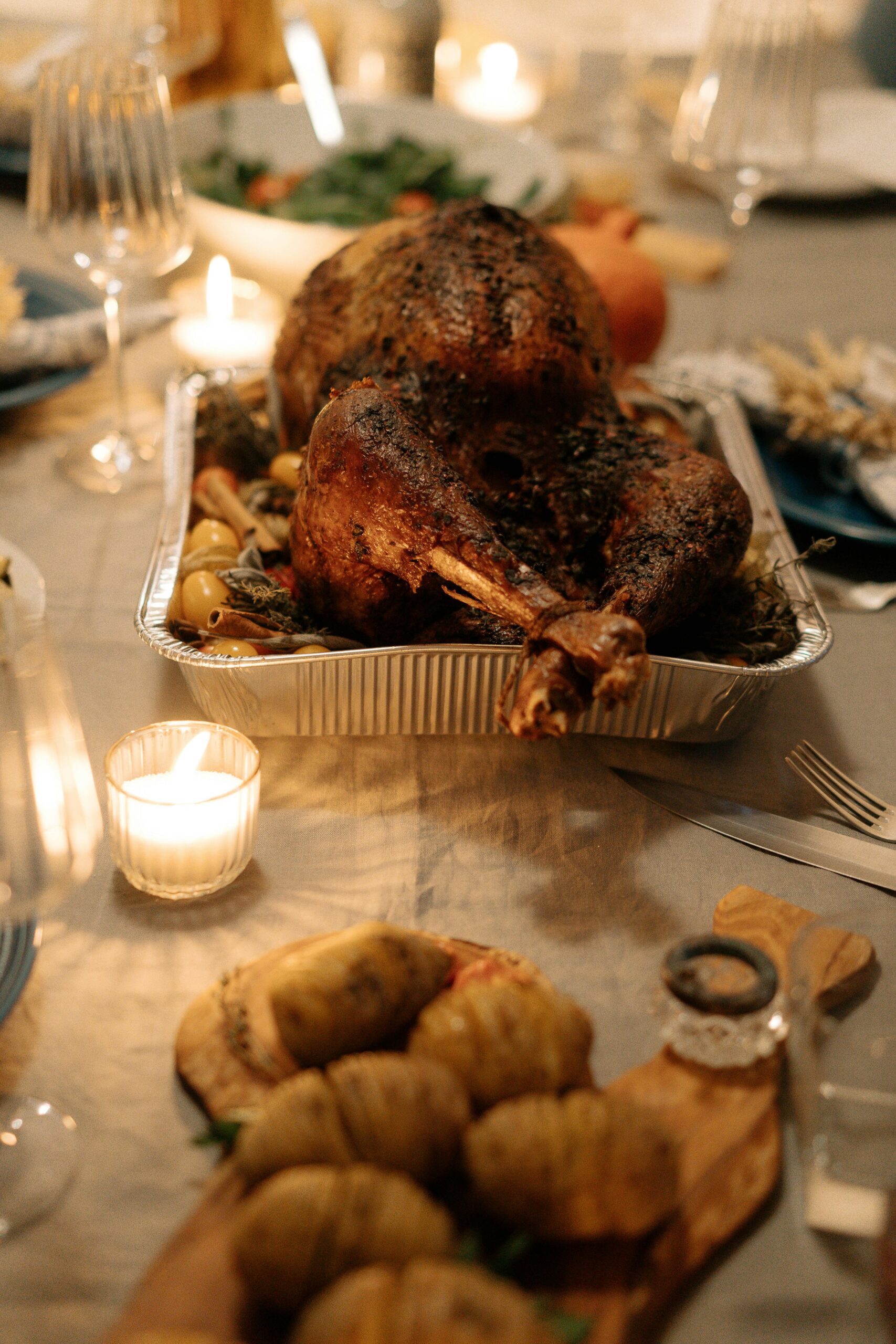
    “Pull that turkey, here.” Suddenly I was handed the triangle hanger and was digging into the boiling greasy liquid, hot oil spattering out at me. I fished with the hook and lifted out the golden brown bird, my mouth salivating at the sight.

    “Good, God,” I said.

    “See, you sound pretty grateful to me,” Papa laughed, sticking the pan under the bird and hoisting it out. “C’mon, let’s get Sterling to carve ‘er up.”

    I followed the stout man into the house, shaking my head at him. I didn’t feel any less angry, but something felt a little lifted from me. I walked with a lighter step.

    In the kitchen Avery poked and prodded Sterling as he carved the turkey, laughed and called out every time he made a mistake. The generous spread was laid out, and the line started to make its way down, filling plates to the edges, little mountainous feasts in every hand.

    The main table was full of adults, side tables were pulled and filled with teenagers and children and anyone in between.

    At one end of the main table, Papa sat. I sat at the other head, then stood. Everyone turned toward me, and I felt my throat constrict. My hand had a slight tremor to it.

    A murmur spread through the family, sighs of relief that I would step up to the task.

    “Please bow your heads for the blessing.” The hush spread as quickly as the murmur had, and soon every head was hung in solemn silence.

    “Heavenly Father, thank you for bringing us all together to share in this Thanksgiving dinner. Thank you for keeping Papa’s timing honest and Sterling’s knife hand steady to deliver another good turkey.” Soft agreement followed. “Father God, there’s an absence today that weighs heavy on our hearts, but we hope and pray that you can bring peace to Monica and the kids, who must go on without a husband and a father. I ask that you take some of our anger and frustration, and instead help us understand why you needed to call Bradley home to you so soon, and to help us trust in your design. And Father, I ask that you help us all get home safe tonight, especially Aunt Tammy, we know how she likes to drink.” A soft ripple of laughter at that last, and I raised my head and looked out at my large, crazy family. Every head was bowed, except Papa’s, who smiled and nodded to me.

    Then I realized that no one had raised their heads yet. I cleared my throat, then said, “Amen.”

  • Ray Bradbury Trio: Week 2

    Ray Bradbury Trio: Week 2

    Author’s note: For now I am reading poems from John Keats. The short stories and collection of poems I acquired from the public domain.

    Essays I collect from a wide range of sources: aeon.com, nautil.us, cleavermagazine.com, and many solo writers like Aldous Huxley and David Foster Wallace. I read anything that piques my interest.

    Also a word about the essays, some of these behemoths are super long. While I will do my best to finish them in their entirety in a single day, I can and will read them over the course of several days if I have to.

    Sunday

    Monday

    • Story: The Picture in the House – H.P. Lovecraft
    • Poem: Epistle to Charles Cowden Clarke
    • Essay: A Modest Proposal

    Tuesday

    Wednesday

    Thursday

    Friday

    • Story: Minds in Ferment – Anton Chekhov
    • Poem: Addressed to Benjamin Robert Haydon I
    • Essay: Consider the Lobster

    Saturday

    • Story: In the Penal Colony – Franz Kafka
    • Poem: Addressed to Benjamin Robert Haydon II
    • Essay: Vulgarity in Literature
  • Chekhov’s Fly Gun

    Chekhov’s Fly Gun

    Chris sat in the driveway to his house, his phone in his lap. He was doing the “daily tasks” for the game that he couldn’t really remember starting but hadn’t felt compelled to stop playing either. It was just something he did every day when he got home from work.

    With that out of the way, he exited the black Tahoe and walked up the perfectly manicured lawn. The doorbell camera chirped its hello to him, and he placed his thumb on the biometric lock. The whirring mechanism spun within the door, let out an angry buzz, blinked red twice, and when Chris tried the door, it was still locked.

    Chris took a deep breath and then placed his thumb on the pad, more firm and precise this time. It buzzed and complained and did not work a second time. Sucking on his teeth, Chris fumbled his house key out and stuck it into the manual lock, giving it a good twist and then pushed through the doorway.

    The door swung open heavily, and Chris’s first hurried steps were met with the scrabbling resistance of his black cat, who had been lounging on the front walkway rug. The cat yowled with indignation, scampering away. In his haste he pulled up half the rug, scrunching the black and white hand-knotted wool up on itself.

    “God- stinkin- mother-” every excited exclamation tripped over the other, half finishing and half forcing the one before it. Chris sucked in another deep breath and straightened the rug out with his foot. The rug came out crooked, no longer in perfect parallel with the walls. He moved it again with his foot, more careful. It was off the other way now, and he stooped low to adjust it with his hands.

    His considerable bulk rolled forward, making the blood rush to his head and making his forehead feel like it was going to pop. He maneuvered the rug back into place, and then stood erect again, stretching his back.

    At the hallway console table, he dropped off his daily carrying items, keys, wallet, a multi-tool he hadn’t used in several years. He kicked off his work shoes under the table and strolled the rest of the way into the living room. He dropped off more stuff on his way through, coat on the back of his easy chair, laptop bag on the coffee table. He scooped the remote up and flicked on the tv, switching it to a YouTube channel he favored and let it run in the background.

    Chris stepped into the kitchen, and on his way to the fridge he spotted a black and green piece of plastic hanging from the wall. He recognized it as the salt gun his mother had bought him several years ago. When was the last time he used it? Had he ever fired the thing? What a terrible existence. Hung on the wall, never to be fired. He glanced down at the outlet underneath the spot where it hung and looked at the blacklight glow of the electric bug killer. He stooped down and pulled the contraption off the wall and inspected the sticky side that the light attracted the bugs to. It was caked with bug corpses, so many winged and hard carapaces stuck together. Images of the little creatures stuck and struggling, ripping themselves apart on the sticky adhesive rushed through his mind. Chris returned the electric bug eradicator to the wall and stepped away from the kitchen, a ripple of nausea gripping his stomach.

    The cat had returned, rubbing his body on Chris’s leg, purring loudly. When Chris sat down on his easy chair, the cat yowled and ran to the pantry.

    “Alright, alright!” Chris yelled. “You’re lucky I hadn’t reclined yet.”

    Back in the kitchen but avoiding looking at the violent glow of the Bug Genocider 3000, Chris opened the pantry and pulled down the plastic bin that contained his cat’s expensive food. The bin lifted much too easily, and when he popped the lid open, he groaned. Empty.

    He scanned the pantry for the fresh bag, finding it at the bottom and groaned again. This time, he pulled the bottom of his pants up and squatted down, feeling his knees creaking. His gut rolled over his waist uncomfortably, but he avoided the pressure from leaning straight over. He snatched the bag from the floor and brought it to the counter. It had a perforated slit for easily opening the bag, and between thumb and forefinger Chris peeled the plastic away. It slipped up halfway through, scratching his fingers and leaving the bag unopened. Chris stared at the top piece of plastic and then turned his gaze down to his black tom cat beneath him.

    “You’re a bastard. You know that? There’s ten different cats in this neighborhood who could be your father.” The cat simply looked up at him, and he sighed as he retrieved the scissors. He sliced away the top of the bag, too low down and half the contents slid down onto the counter and onto the floor.

    Chris felt a primal surge of rage shiver up his body. His hands tingled with the desire to destroy something. Then he took a shuddering breath and scooped some of the food up using the cat’s bowl and set it in the usual spot. The cat was already crunching away at his feet, but he ignored the cat and spilt food and walked to the living room. With a heavy plop, Chris set himself into his chair with a sigh.

    With his eyes closed he sat for a long time. Then finally he reclined his chair, looking at the TV. A prolific streamer played a video game that Chris was too scared to play himself, but he enjoyed the complexity of the gameplay. The competitive nature, the speed and the high stakes player vs player combat. It was all too much for him to play, but to watch, he could do that.

    The black cat made his way into Chris’s lap, perched primly into a loaf and purring deeply. Chris scratched under the cat’s chin and said, “You’re not a bastard, buddy, I know who your dad was. He was the only other black cat in the neighborhood.”

    A black speck made its way up the wall on his left, but Chris pretended not to see it. Up and up the wall it went. While Chris pretended it didn’t exist, his black monster of a kitty did not. The animal made a noise in the depths of its throat, one he didn’t think the animal had ever made before, and scrambled across Chris in great raking motions, tearing flesh in his wake, and launched towards the black spider on the wall.

    The black cat was airborne longer than he should have been, then crashed into the wall underneath the bug and slid down in a furry flailing heap.

    Chris sighed deeply and pinched the ridge of his nose. He could feel a headache coming on. The black cat growled underneath its escaped prey, so Chris finally looked at the spider, and saw it for the beast that it was. Roughly the size of a silver dollar, the thing was massive.

    When it was apparent the cat wouldn’t leave it alone, Chris stood from his chair. His fists were clenched as he made his way to the kitchen. He pulled the black and green plastic salt gun off the wall. No bigger than a toy, he gripped the handle and rotated the thing in his hands. He couldn’t remember ever having shot it, but he must have because it was full of salt. He pulled the slide back, loading it and shooting it into the void of the pantry. It gave a loud pop, scattering salt with little tinkling noises.

    Chris marched up to the spider. The thing was huge, and in the back of his mind he wondered at that. Wasn’t this thing meant for flies? He stuffed the barrel toward the spider and pulled the trigger.

    The salt gun popped and the spider was shot off of the wall. A black cloud of small specks went flying in every direction. The cloud bloomed outward, cascading down and out. Chris saw little black specks all over his hands and arms, crawling on the barrel of the gun.

    With a furrowed brow Chris inspected his arm. Dozens of tiny baby spidershundreds of themfrantically crawled up his arm, disappearing into the sleeve of his polo shirt.

    The gun clattered to the ground. Chris felt a crawling sensation on his face, but screamed through closed lips, for fear that they’d go into his mouth.